Florida Winter Pool Care: What to Change When It Cools Off
 By Brent, owner · State-certified pool/spa contractor · 3 min read
Up north, people close their pools for the winter. In Florida, we don't. Your pool stays open all year, but it needs slightly different care from November through February than it does in July.
Here's what changes, and what to keep doing.
Your pool needs less chlorine (but not none)
In summer, strong sun and hot water burn through chlorine fast. In winter, the sun is lower and the water is cooler, so chlorine lasts longer and algae grows more slowly. Most pools need noticeably less chlorine.
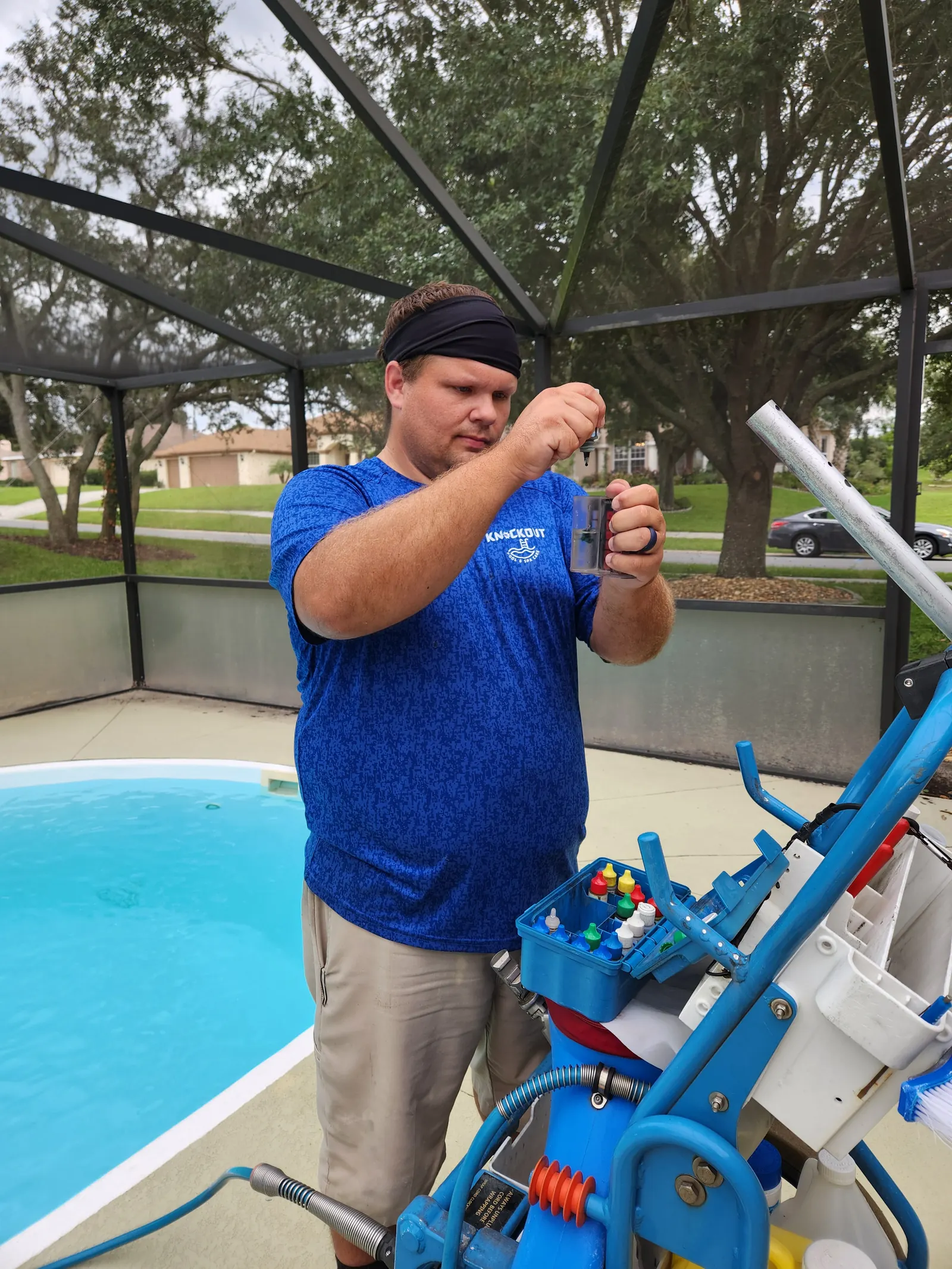
Keep testing, though. A pool that goes weeks without a check can still turn green on a warm stretch, and our winters have plenty of 75-degree days.
You can usually run the pump less
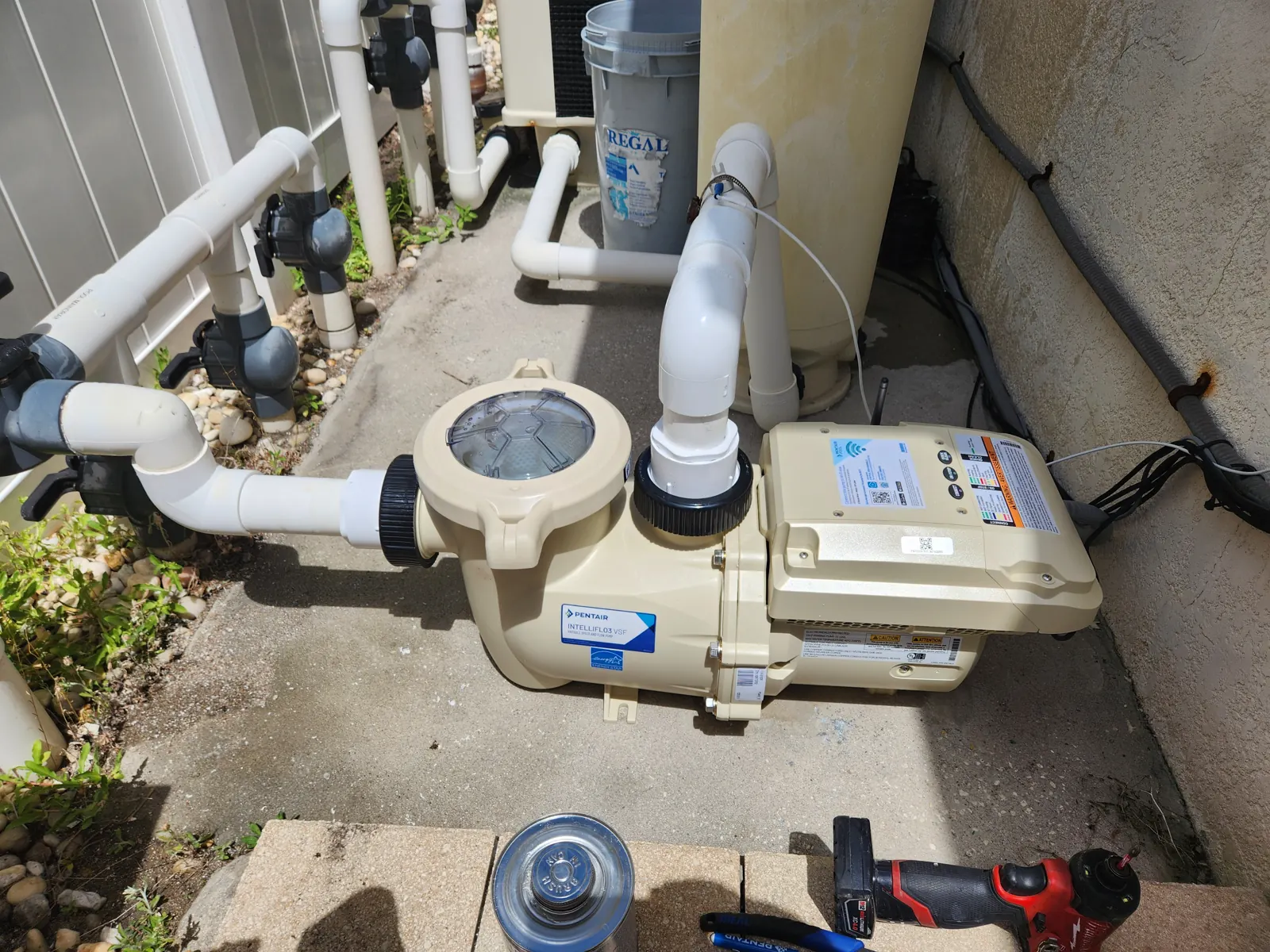
You don't need summer run times in winter. With less chlorine demand and slower algae growth, most pools can run fewer hours per day. When a customer wants their run time reduced, I cut a single-speed pump's timer back a few hours. With a variable-speed pump, you can usually just turn the speed down or shorten the run time.
Don't cut it too far. The water still needs to circulate through the filter every day, and the chlorine still needs to be mixed in.
Salt systems slow down in cold water
If you have a saltwater pool, keep in mind that many salt cells make less chlorine, or stop completely, when the water gets cold, often somewhere around 50–60°F depending on the model. During a cold snap, your salt system may not keep up. You may need to add some liquid chlorine until the water warms up again. Your salt system's display or manual should list its cutoff temperature.
Watch the falling leaves
Many trees around here drop leaves in winter and early spring. Leaves in the water use up chlorine and clog baskets. Keep the skimmer and pump baskets empty, and brush and vacuum regularly.
Freezes are rare, but be ready
Hernando County only gets a handful of nights near freezing, but a hard freeze can crack pipes and damage pumps, filters and heaters. Moving water doesn't freeze, so on those nights:
- Run your pump through the night and early morning
- Check that your automation's freeze protection is turned on (a lot of people turn it off and forget)
- Run any other pumps tied to the pool too, like a booster pump for a cleaner or a waterfall
Want to keep swimming? Add heat
Winter is when a heat pump earns its keep. A heat pump pulls warmth from the outside air and works well in our mild winters, at a much lower running cost than gas. I compared the two in Heat Pump vs. Gas Heater.
A solar cover helps too. It holds heat in overnight and cuts down on evaporation.
Your winter checklist
- Keep testing the water every week
- Lower pump run time, but keep the water circulating every day
- Check chlorine on salt pools during cold snaps
- Keep baskets empty and the filter clean
- Make sure freeze protection is on
- Get your heater checked before you need it
Getting ready for cooler weather? I install and repair heat pumps and heaters, and fix the pumps, filters and automation that keep your pool running through the winter. Call (352) 773-0088 or request a quote. I serve Spring Hill and the rest of Hernando County.