Pool Light Not Working? Common Causes and What to Do
 By Brent, owner · State-certified pool/spa contractor · 3 min read
You flip the switch and nothing happens. Or the light flickers, looks dim, or keeps tripping the breaker. Pool lights fail for a handful of reasons, and some are easy to check yourself. Others need a licensed pro, because they involve electricity and water.
Safety first: always turn the power off at the breaker before you touch a pool light or its fixture. If a light shocks you, smells burnt or keeps tripping the breaker, stop and call a pro.
1. The breaker tripped
Start with the breaker for the pool light. Some pools also have a GFCI breaker or outlet on the light circuit, which shuts off power the moment it senses a problem. If anything is tripped, reset it once.
If it trips again right away, don't keep resetting it. A breaker that keeps tripping is telling you something is wrong, very often water getting into the light.
2. Water got into the fixture
This is the one I see most. The light sits in a sealed housing with a rubber gasket around the lens. Over time that gasket wears out, water seeps in, and it shorts or burns out the light.
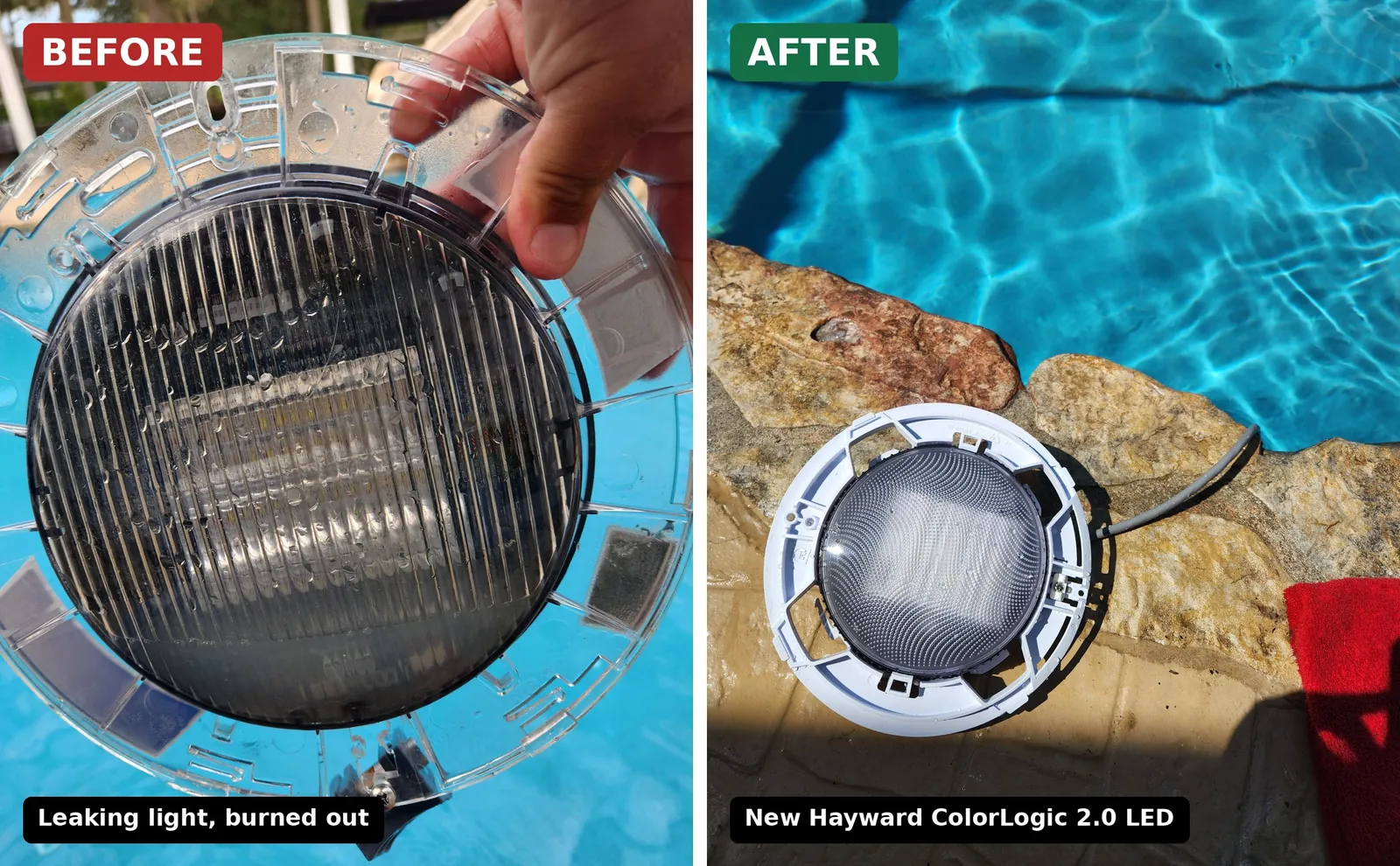
On a job in Brooksville, the homeowner's light had stopped working. When I pulled it out, you could see a water line right across the bottom of the old lens. Water had leaked inside and burned it out, so the old light had to be replaced. I installed a new Hayward ColorLogic 2.0 LED. You can see the before and after on the projects page.
Signs of water in the light: fog or droplets inside the lens, a visible water line, rust or corrosion, or a breaker that trips when the light comes on.
3. The bulb burned out
Older pool lights use incandescent or halogen bulbs, which burn out like any other bulb. If the power is fine and the fixture is dry, the bulb may simply be done.
If your light is old enough to still have an incandescent bulb, it's usually worth upgrading to LED instead of replacing the bulb. LEDs use far less power, last much longer and can show different colors.
4. A wiring, transformer or controller problem
If the power is on and the light still won't work, the problem may be in the wiring between the panel and the light. Florida code requires low-voltage lighting on new pools and full light replacements, so most pool lights here run on 12 volts, powered by a transformer, and many also connect to an automation system or light controller. Any of those parts can fail. This takes testing with a meter and should be done by a licensed contractor.
Don't run a pool light out of water
If the water level drops below the light, don't turn it on. Many pool lights rely on the surrounding water to keep cool, and running them dry can overheat and crack the lens or burn out the light.
When to call a pro
- The breaker trips again after you reset it
- You see water, fog or corrosion inside the lens
- The light flickers or works only some of the time
- You want to upgrade to LED or color lights
Replacing a pool light means working with the wiring and the sealed fixture underwater. I'm a state-certified pool and spa contractor (CPC1460717), and I install, repair and replace pool and spa lights from all the major brands, including Hayward, Pentair and Jandy, throughout Spring Hill, Brooksville, Weeki Wachee and Hernando County. See pool repair and equipment installation.
Pool light out? Call (352) 773-0088 or request a quote.